Wednesday, April 1, 2009

The Lazy Environmentalist - "on a budget"


Our good buddy Josh Dorfman aka The Lazy Environmentalist just came out with a new book that is focused around going green on a budget. As the title on the book says - "save money, save time, save the planet".

Aside from being a world renowned expert on green living, Josh also runs the Vivavi showroom in NYC which of course offers all kinds of great Maku Furniture!

You can buy the book here and here is a link to all the eco goodness relating to the launch party a couple of days ago.

Congrats Josh, we'll keep an eye out in the mail for our signed copy... :)

Check out the vid below for all the happening highlights from the launch party.


Friday, March 27, 2009

Earth Hour 2009! (This Saturday 3.28.09)


Earth Hour 2009, this Saturday from 8:30-9:30 pm at your local time! Invite some friends over, have a party, lite some candles (Maku candle holders...) and vote for mother earth!! Most importantly, turn off your lights and remember 1 person can make a difference... :)

We'll be spreading the word here in Carlsbad and will be sure to post updates on Saturday night!

Take Action here.

Thursday, March 26, 2009

A Sea Change

Continuing on with the Ocean related "theme" of recent posts I thought I would try and bring some attention to what posses to be the newest and potentially greatest threat to our Oceans.

Acidification of our oceans has risen 30% since 1900! Yikes, that's a lot of acid in our most precious of natural resources and the cycle that drives life on our little piece of the galaxy.

A Sea Change documents Sven Huseby's travels through the ancient fishing grounds of his Norwegian ancestors and looks at the acidification of our oceans. From both the human element and the scientific element. Mr. Huseby first learned of this emerging disater when he read Elizabeth Kolbert's article in The New Yorker entitled "The Darkening Sea".

A Sea Change debuted to tremendous acolades at the Environmental Film Festival 2 weeks ago in Washington D.C.

I wonder if President Obama attended the film festival or perhaps he was too busy putting his brackets together for March Madness or setting his schedule for his appearance on The Tonight Show... (Sorry, couldn't resist a little dig on our 44th president but to me it seems he should be focusing on the economic and environment problems at hand versus trying to be a media star or dare I say media whore...)

....Now back to our regularly scheduled programing - So check out the trailer below for what looks to be a great documentary on the plight of our oceans. And remember change starts with one person at a time!


Watch A Sea Change Trailer in News | View More Free Videos Online at Veoh.com

Wednesday, March 25, 2009

Plastic in the Pacific

As you have read before on my Blog, I have talked numerous times about the North Pacific Gyre and the HUGE blob of trash floating in the pacific ocean.

I found this article is in Today's Wall Street Journal, page A14. It is nice to see more broad based media outlets covering this potential disaster in the Pacific Ocean.
---------

WSJ
MARCH 25, 2009.

How Big Is That Widening Gyre of Floating Plastic?

In the Pacific, Ocean Flows Sweep Litter Into a Flotilla That Could Be the Size of Quebec or Maybe the U.S. -- No One Knows

By CARL BIALIK

A soup of plastic debris floats off the coast of California, a testament to humanity's reliance on plastic and the failure to dispose of it properly.

Just how big is this oceanic zone? Some say it is about the size of Quebec, or 600,000 square miles -- also described as twice the size of Texas. Others say this expanse of junk swept together by currents is the size of the U.S. -- 3.8 million square miles. Or, it could be twice that size.

The debris floating in a large area of the Pacific Ocean usually isn't visible on the surface.

The Great Pacific Garbage Patch, as it has been called, has become a symbol of what some say is a looming crisis over trash. But this floating mass of plastic in the Pacific Ocean is hard to measure, and few agree on how big it is or how much plastic it holds. That makes it difficult to determine what to do about it.

That hasn't stopped activists and the media from using only the biggest estimates of the patch's size to warn of an environmental catastrophe.

"We've found it really captures the public's imagination and its focus," says Eben Schwartz, marine-debris program manager for the California Coastal Commission, a state agency. However, "as hard as [environmental advocates] try to characterize it accurately, it is prone to mischaracterization."

The plastic-rich portion of the ocean is a product of swirling currents, known as the North Pacific Subtropical Gyre, that gather and concentrate debris. It captured public attention thanks to the efforts of Charles Moore, a woodworker-turned-sea captain who sailed through the zone in 1997 and was stunned to find plastic debris hundreds of miles from land. "That set off alarm bells and made me want to monitor it, made me want to quantify it, made me want to get a better handle on it," says Capt. Moore, a licensed merchant-marine officer. He dedicated the Algalita Marine Research Foundation that he had founded to studying this region of the ocean and publicizing its plastic problem.

The Numbers Guy BlogTaking the Measure of Plastic Soup.
Researchers at the foundation have attempted to quantify the gyre by sailing deep into the Pacific and trawling for plastic and zooplankton using a contraption that resembles a manta ray. Sifting through the entire gyre for plastic would be impossible, so researchers survey a small sample.

But it is difficult to know how to extrapolate their findings to the entire region, or even what that region is. The borders of the gyre shift between seasons, and some scientists, such as Holly Bamford, director of the National Oceanic and Atmospheric Administration's marine-debris program, argue that the high-plastic area is confined to a relatively small part of the gyre.

"I admire Charles," says David Karl, an oceanographer at the University of Hawaii. But Capt. Moore's estimate of the size of the plastic patch -- up to twice the size of the U.S. -- strikes Prof. Karl as guesswork. "He doesn't know the edge" of the area.

Capt. Moore has relied on models of ocean currents from a retired NOAA scientist to help estimate the scope of the concentrated-plastic zone, with debris lurking, often in tiny, barely perceptible pieces, at or just below the surface. "I just did a very crude estimate, by getting a globe and placing my hand over the area defined by this current, and placing my hand over the continent of Africa" to see how the two compared, he says. "The condensed-soup part may be considerably less than the whole," he concedes, but he is frustrated by critics who play down the scope of the problem without doing any fieldwork.

Even as the debate over the plastic patch's size continues, some of the foundation's estimates have been reported as scientific certainty. For instance, a decade ago, researchers found that the ratio of plastic to zooplankton by mass was six to one. A more-recent visit turned up an increase in this ratio, to 46 to one, according to the foundation's Web site. But that is an average of the ratio at each testing site, which included some very high ratios, probably anomalies. A more comparable figure is eight to one, representing a more modest increase when results are aggregated across all testing sites.

In addition, comparing plastic and plankton weight might not be an ideal way to measure the problem, according to Angelicque White, a biological oceanographer at the University of Oregon who accompanied Prof. Karl on a recent voyage to the gyre. Dr. White points out that many plankton are too small for the nets, and might not have been included in the count. What's more, while the heaviest bits of plastic inflate the measure of the debris patch, those pieces pose less of an environmental threat, because they are too large for marine creatures to mistake for food.

Capt. Moore said that his scientific papers have made these distinctions clear. But news articles generally haven't. Dr. Bamford says inconsistent units of measurement of the plastic problem have impeded research. "We're trying to develop a standardized method," she says of NOAA, "so we can really get a handle on how this compares to various locations around the world." It's possible that consistent measurement will reveal that other parts of the ocean without a catchy name are just as plastic-rich, or more so.

Some misinformation comes from other environmental groups exaggerating the alarming research. Environmental advocate David Suzuki has written of a "massive, expanding island of plastic debris 30 meters [98 feet] deep and bigger than the province of Quebec." Asked whether the high-plastic region could really be called an island, Bill Wareham, senior marine conservation specialist with the David Suzuki Foundation, says, "It's not going to look like island in the context of, 'Gee, I can walk across that.' But it is a very high density of plastic." He adds, "David speaks in a way where he's framing the issue in a way people can understand it."

Other advocates object to such terminology. "The problem with superlative statements that this is somehow a huge floating mass of plastic is that they inevitably lead to desensitizing people when they learn the truth of it," says David Santillo, a senior scientist with Greenpeace.

Even if scientists and advocates could agree on numbers for the size and plastic concentration of the gyre, it is unclear what they would do with the information. Plastics can harm ocean birds and mammals who eat it, because they carry toxins, can pierce internal organs and can trick animals into thinking they are full. But hard numbers are tough to come by. "It's so hard to say a bird died due to plastic in its stomach," says Dr. Bamford. "We have seen birds mature and live out their whole life, and necropsies show plastic in their stomach."

Though no one thinks any possible benefits of plastic outweigh risks, Prof. Karl did find some positive aspects of the patch -- a high concentration of microorganisms clinging to the debris. "The microorganisms are good for the ocean, because it turns out they're making oxygen," Prof. Karl says. "If plastics were otherwise neutral to the environment, then they'd be helping by harvesting more solar energy." Dr. Bamford says it is possible that a cleanup, even if it were feasible, would do more harm than good, by removing these organisms.

Capt. Moore says quantifying the plastic could provide a starting point for measuring the effectiveness of land-based efforts to choke the flow of plastic to ocean waters. "I would love to have a government agency form a concerted program to quantify the debris," he says. "It's a tragedy of the commons: Nobody owns the problem."

Write to Carl Bialik at numbersguy@wsj.com

Printed in The Wall Street Journal, page A14

Tuesday, March 24, 2009

Revolution in a Bottle


Revolution in a bottle looks like a pretty good read. Tom Szaky is the founder of Terracycle. The company philosophy is great and although I haven't read the book yet, it has gotten solid reviews... I'll post more after I read it.

Monday, March 23, 2009

The Fight for Red Lady goes on...

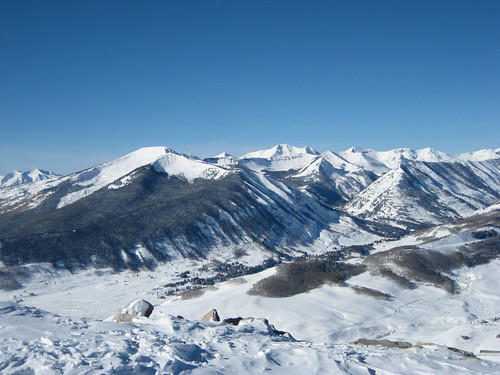
I was fortunate enough to grow up in an amazing little town called Crested Butte in the high country of Colorado. Back then The Butte boasted a whopping population of right around 1000 people. Ski Bums, Hippies, or those just looking to get away from the rat race. Funny enough the population still hovers around 1000, The Skiing is great, and my moms favorite place to hang out - The Wooden Nickel is still there.

I try and make it back to CB every couple of years and I have a sneaking suspicion that one of these days I'll be back there for good...

Certainly growing up there in the late 60's on through the 70's and beyond is with out a doubt why I have such an affinity for all things outdoors and a keen respect for our environment.

But aside from the unique atmosphere of CB - the long winters, great skiing, mud season and the rest of what most people think of when Crested Butte comes to mind. There were incredible summertime excursions to Irwin Lake, The Maroon Bells, Gothic, fishing in or "tubing" down the slate river or riding our bikes as far as we could on Red Lady aka Mt Emmons.

It must have been when I was around 10 years old in the late 70's that a mining company came to town and wanted to take all the molybdenum out of the Red Lady. The town came together and fought the Amax Mining company and soon after they left. Well it sounds like the fight for Mt Emmons is once again on.

Check out here for more info and the High Country Citizens Alliance Blog to help the town of CB stop the unwanted threats towards The Red Lady.

If you ever have the opportunity to get to CB, stop in to the Wooden Nickle, look for the picture of Botsie and D.P. on the wall and share some time in a truly magical place.


Red Lady from the Historic Crested Butte Train Depot from HCCA on Vimeo.

Friday, March 20, 2009

Vernal Equinox 2009!

Holy Smokes, I forgot today was the first day of Spring! That right no more old man winter.

And what a crummy winter it has been here in So.Cal. Sure we are a bit spoiled with the constant 70 degree winter days and hanging out on the beach in January... :) By the way, it's dreary and in the low 60's today incase that makes anybody feel better

What I'm talking about is surf related. The winter of 2008-2009 has to go down as one of the smallest and lamest winters in recent memory. In fact, there were only a couple of decent swells this winter around Thanksgiving time and then again in early February. Neither of which produced anything near the "adrenaline pumping / scary range"

So here's to Spring 2009, may the southern hemisphere start to fire up to send us some great south swell and may the water warm up so we can get out of those funny rubber suits we surfers wear when the water is cold!

Spring has Sprung my friends, shed your hoodies and sweaters, break out the flip flops, tend to your gardens and start working on your tan! Summer is right around the corner...

The Gardens of Babylon and Urban Patio in Nashville

One of our best specialty retailers Deb from Urban Patio in Nashville Tennessee sent over these shots from the Nashville Home and Garden show last weekend. Urban Patio partnered with The Gardens of Babylon (also from Nashville) to create this amazing display of vertical gardening and featured the Maku Furniture lounge chair and Maku side table. Combined they won the American Horticulture Society Environmental Award for the show!


Congrats to Deb and crew, keep up the rocking job!


Thursday, March 19, 2009

Pick up 3, and a difference you will see....


I've been meaning to talk about this Super Grom named Cobi Emery from nearby Del Mar. 2 years ago when Cobi was 10 he started Pick up 3 as a way to bring increased attention to pollution on the local San Diego beaches.

Now at 12 years old and a couple of years into his project he has made such a tremendous difference. Just think what can be done if we all took the same passion, verve, and stoke that young Cobi has...

A big High 5 Cobi and I'd be happy to share a wave with you any day! Keep up the great work!

Tuesday, March 17, 2009

Green Beer, Green and More, Green Living, and my Great Grandma (2009 edition)

Happy St. Patricks day to all!

March 17th is a special day for me as it is my great grandmothers birthday. All though she passed some years back today she would be 111, born in 1898.

Nana was a great woman who grew up during the great depression and dustbowl days of the early 1900's. No matter what, she always had a great outlook because she had seen so much and been through so much.

I think there are a lot of parallels that can be drawn from yesteryear to now. Certainly the economic conditions are an easy one. As well as the drought many western states are seeing right now.

But also, there was this little thing going on back then called The Industrial Revolution. Although it was near the end if not the end of the Industrial revolution by the late 1800's and as the great depression began to take hold. People looked back to the ways they had lived prior to Industry and the technology taking over.

More specifically, people looked back to their environment and started to realize the damage and destruction that had taken place on the precious natural resources of our country.

The result? The birth of the environmental movement.

Early on in 1848, Henry David Thoreau published his book Walden. As you may recall, it told of Thoreau's two-year living experiment in the woods near Walden Pond. Shortly after, John Muir founded the Sierra Club in 1892. Two decades later William Hornaday published "Our Vanishing Wildlife" in 1913. Prompted by the incredible decimation of the American Buffalo this book was truly one of the first to shed light on the subject and the loss of certain species throughout the plains of America West.

So what am I getting at here? You can look at history and say that some incredible things spurred out of the great depressions(despite incredible hardships of many) and the post industrial revolution era's.

I believe this is much like the "Green Movement" of current. When masses of people are challenged, great things happen. The increased focus on renewable energies such as Solar Power, Fossil Fuel alternatives such as Bio Diesel. And although as members of this great country we don't individually have a lot of disposable income right now to spend on "greening" our lives. The eco friendly movement carries on and companies at all levels are working to come up with ways to make great products that improve not only our lives but more importantly our environment!

So on this day, as my great grandma would say, remember good things are happening and everything will be ok! (Thanks Nana!)

Before we countdown the top 10 ways to green your life, I'd like to welcome Greenandmore.com to the Maku furniture family. The Green and more crew has tons of great ways to green your life!

So lets get to the countdown of the top 10 ways to Green your life (inexpesively)

10. Replace your lightbulbs with newer ones that use less energy and last longer.

9. Look at your watering habits throughout your yard. Is water running off or are sprinklers hitting the sidewalk or street? Believe it or not the majority of home water consumption is spent on the lawn... Check those sprinklers - save water and save money!

8. Reduce, Reuse, and Recycle those cans and plastics so they are reintroduced back into the supply chain. This does lower the cost on goods as recycled technology continues to improve.

7. Use only the lights you need to in your house or office. If you aren't in the room, turn em' off or better yet get your company to buy these.

6. Plant a tree!

5. Switch to eco friendly soaps and personal care products

4. Unplug your life - Americans pay $1 billion a year to power our televisions and VCRs while they're turned off.

3.Get rid of Junk mail - Get off those catalog lists and the countless catalogs you look at once and then pitch. Instead Get on line and use the World Wide Web to reduce deforestation. Heck isn't that why Al Gore invented the internet...(hahaha)

2. Reusable Bags

and for the number 1 way to green your life, feel better, and get in shape (Drum roll please!)

*** Park the car and ride your bike to work 1 day a week. As spring approaches it's a great way to reduce emissions and get back in shape for summer!***

I'm off to enjoy a beer and a shot of Irish whiskey in honor of my great grandma. So today on this wonderful St. Paddy's day 2009 I leave you with this limerick of limericks:

"The limerick packs laughs anatomical
In space that is quite economical
But the good ones I've seen
So seldom are clean
And the clean ones so seldom are comical!"

Monday, March 9, 2009

Plastiki


From JUNK to PLASTIKI, the voyages of these courageous captains in an effort to raise awareness on plastic in our oceans is nothing short of spectacular!

I've made a few posts in the past about JUNK's travels across the pacific from So.Cal to Hawaii. Now David de Rothschild is going to sail a boat made entirely of plastic bottles with a P.E.T. outer shell 12000 nautical miles from San Francisco all the way to Australia! The voyage is taking inspiration from Thor Heyerdal's 1947 expedition - Kontiki.

PLASTIKI is set to sail in April of this year!

Friday, March 6, 2009

Rise Above Plastics

Check it out, Rise Above Plastics is a site all about the awareness of the effects plastic has on our lives. Since Rise Above Plastics luanched thier website over 11 BILLION plastic bottles have ended up in landfills... YIKES!

You've probably read here in the past about the North Pacific Gyre and the Blob of plastic floating in the Pacific that is 2 times bigger than Texas.

Rise Above Plastics is supported by everybody from the Surfrider Foundation and Jack Johnson (who we really dig!) to the Algalita Foundation, Heal the Bay, Junkraft, and a whole bunch of other really cool people.

How are you going to reduce your plastic usage? A couple of easy ways are to get your own reusable bags for those trips to the grocer and a cool Sigg Water bottle!

Wednesday, March 4, 2009

Maku Furniture featured on The Alternative Consumer

One of our favorite sites The Alternative Consumer featured a few Maku Furniture pieces on their site over the weekend. The Maku Sectional, Maku Lounge Chair, and Maku Coffee table were all pictured in a great little blurb about how we use 100% reclaimed wood in our furniture.

And by the way that's Pro Surfer and Maku Lifestyle Ambassador Rizal Tanjung chilling on the lounge chair pictured.

Thanks for the support A.C. crew!

Click here to check it out!

Tuesday, March 3, 2009

Structured Green - The Creative Gale, Savannah


Mike and crew are hosting in their store a cool entrepreneurial support event with The Creative Gale. So if your in Savannah, an entrepreneur, or just want to meet some very cool people check it out!

The Creative Gale, this Thursday March 5 at 3:00pm, will be held at the wonderful Structured Green!


A great group of speakers will be coming:

Jamie Wolf – The Creative Coast Alliance

Chris Miller – illuminomics

Nathan Belzer — Belzer Law

Brian OliverSmith — Urban Planet Mobile

Blaz Ruzic -Structured Green

Ray Wenig - Ariel Savannah Angel Partners

We're excited to meet all of the talented, connected people who are attending.

Anyone can attend this Entrepreneurial Support Infrastructure event. Just register online at this link: http://creativegale.net/savannah

Butts at the Beach

One of my biggest pet peeves is when people throw their cigarette butts out the window. Be it on the highway, in a neighborhood and especially on the beach.

Cigarette butts are the #1 item found in urban run off pollution throughout Southern California. If you smoke, hold on to your butts. If you don't smoke, even better!

As a member of 1% For the Planet we donate a portion of our total sales to our friends at The Surfrider Foundation. They just came out with a cool little PSA on you tube about cigarette butts.